
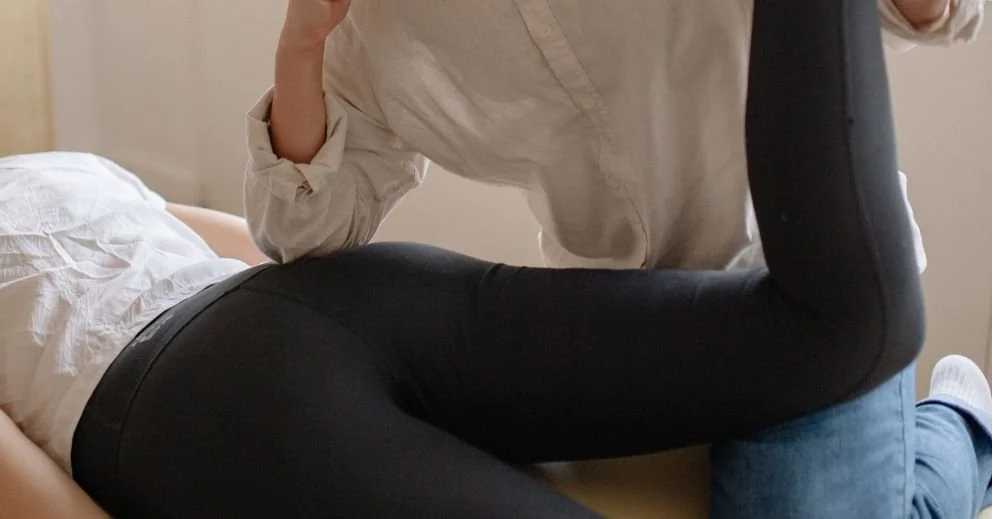
If your knee has been nagging at you for weeks and you're not sure where to start, here's a simple way to think about it. First, work out what's actually driving the pain. Then, address the stiffness or weakness around it. Finally, rebuild the movement patterns that keep it from coming back. That's the practical framework an osteopath uses, and it's worth understanding before you book anything.
TLDR: Knee pain is often caused by problems above or below the joint, not just the knee itself. Osteopathy looks at your hips, ankles, and overall movement pattern to work out why the knee is under strain, then uses hands-on treatment and tailored exercises to help it settle. Getting this right usually takes a few sessions, not one quick fix.
Working Out What's Actually Causing Your Knee Pain
Knee pain rarely starts in isolation. It's usually the result of how your whole leg, hip, and foot are working together, or not working together.
An osteopath's first job is figuring out what's really going on before any treatment happens.
Common Triggers Behind Knee Pain
Overuse from running, hiking, or repetitive squatting
Weak or tight hip muscles changing how the knee tracks
Old ankle sprains that have changed your walking pattern
Arthritis or general wear and tear in the joint
A sudden twist or impact during sport
Signs It's Time to Get It Checked
Pain that's lasted more than a couple of weeks
Swelling that comes and goes without explanation
A knee that feels like it might give way
Pain that changes how you walk or climb stairs
Clicking or catching that's new or getting worse
How an Osteopathic Assessment for Knee Pain Actually Works
This is where the step-by-step part comes in. A good assessment doesn't just poke at the sore spot, it looks at the whole chain of movement that leads up to and away from the knee.
Step One: Understanding Your History
Your osteopath will ask when the pain started, what makes it worse, and whether you've had any past injuries. This isn't small talk. A knee that's been sore since an old ankle sprain needs a different approach than one that flared up after a new running program.
Step Two: Watching You Move
You'll likely be asked to walk, squat, or stand on one leg. Watching how your hip, knee, and foot move together often reveals more than pressing on the knee itself ever could.
Step Three: Hands-On Testing
From here, your osteopath checks the knee's range of motion, the strength around it, and how the surrounding joints, like your hip and ankle, are contributing to the problem.
Osteopathic Treatment Options for Knee Pain and Stiffness
Once the cause is clearer, treatment is built around what your knee actually needs, not a one-size-fits-all routine.
Hands-On Techniques
Soft tissue work on the thigh and calf muscles feeding into the knee
Joint mobilisation to improve movement in a stiff knee, hip, or ankle
Gentle stretching to ease tight structures around the joint
Movement and Strength Work
Targeted exercises to strengthen the hip and thigh muscles supporting the knee
Balance and control drills if your knee feels unstable
Guidance on easing back into walking, running, or sport safely
Most people find a combination of hands-on treatment and a few simple home exercises works better than either approach alone. It's rarely about one single fix.
Movement Problems Beyond the Knee Itself
Sometimes the knee is the symptom, not the source. This is a big part of what sets osteopathic care apart from just treating the painful spot.
When the Hip Is the Real Issue
Weak or tight hip muscles can change how your leg rotates when you walk or run, putting extra load through the knee. Addressing hip strength often takes pressure off the knee without ever directly treating it.
When the Foot and Ankle Are Involved
Flat feet, tight calves, or an old ankle injury can all alter how force travels up through your leg. If the ankle doesn't move well, the knee often compensates, and that compensation adds up over time.
Everyday Habits That Add Strain
Sitting for long stretches without moving
Wearing worn-out or unsupportive shoes
Returning to exercise too quickly after time off
Favouring one leg without realising it
Getting Back to Normal Movement, Step by Step
Recovery isn't usually instant, and it shouldn't be rushed. A gradual, structured approach tends to hold up better long term than pushing straight back into full activity.
Early sessions often focus on calming pain and restoring basic movement. As things improve, the focus shifts to strength, control, and getting you back to the activities you actually want to do, whether that's walking the dog around or getting back on the tennis court.
If you're also dealing with general muscle tightness or recovery issues elsewhere in the body, it's worth mentioning that to your osteopath too, since it's often connected.
Take the Next Step Towards More Comfortable Movement
If knee pain or movement difficulties are holding you back, Sunshine Health Osteopathy can assess what may be contributing and develop a care plan tailored to your needs and goals.
Book a knee assessment with Sunshine Health Osteopathy to discuss your symptoms and explore your treatment options.
Key Takeaways
Knee pain is often linked to how the hip, ankle, and foot are moving, not just the knee joint itself
A proper assessment looks at your history, how you move, and hands-on testing before treatment begins
Treatment usually combines hands-on techniques with targeted strength and movement exercises
Recovery works best as a gradual process, not a single quick fix
Addressing the root cause helps reduce the chance of the pain coming back
FAQ
How many sessions does it usually take before knee pain starts improving?
It varies depending on how long the pain has been going on and what's driving it. Some people notice a difference after two or three sessions, while longer-standing issues can take a bit more time and consistent home exercise.
Can osteopathy help if I've already had a knee scan that came back "normal"?
Yes, this is actually quite common. Scans show structural issues but don't always explain why a joint is painful day to day, and movement-based assessment can pick up contributing factors a scan won't show.
Is it safe to keep exercising while getting treatment for knee pain?
In most cases, yes, though the type and intensity of exercise may need adjusting for a while. Your osteopath can guide you on what to modify so you're not stopping activity altogether.
What should I wear or bring to a knee assessment appointment?
Loose, comfortable clothing that allows you to move freely, like shorts or leggings, makes the assessment easier. Bringing any previous scan results or reports is helpful but not essential.
Will I need ongoing treatment, or is this usually a short-term fix?
Many knee issues settle with a short course of focused treatment and exercise. Some people choose occasional check-ins afterwards, particularly if they're returning to sport or have a history of recurring strain.