Osteopath For Knee Pain
Is knee pain slowing you down? We’ve got you covered.
Knee pain can make everyday activities more difficult, whether you're walking, exercising, climbing stairs, or simply getting through your daily routine. It can affect your mobility, comfort, and confidence if left untreated.
Our osteopaths provide personalised care to help reduce discomfort, improve joint function, and support your recovery, so you can stay active and confident.
We'll take the time to understand how your knee pain is affecting your work, hobbies, and everyday routine before recommending the most appropriate care.
Our goal is to help you move with greater confidence, so you can get back to doing the things that matter most.
Rated 5.0 by 100+ locals.
Knee Pain Explained
Knee pain can develop from injury, overuse, or changes within the joint. Learn more about the common causes, symptoms, and how osteopathy may help.
-
Knee pain can occur when the muscles, ligaments, tendons, or cartilage around the joint become irritated or injured.
Ligament injuries
Meniscus tears
Tendon irritation
Arthritis
Overuse
-
Symptoms vary depending on the underlying cause of your knee pain.
Pain when walking
Knee stiffness
Swelling
Clicking or locking
Reduced stability
-
Several injuries and conditions can affect the knee joint.
ACL injuries
Meniscus tears
Patellar tendinopathy
MCL sprains
Runner's knee
-
To understand your knee pain, we'll look beyond the joint itself, assessing how your hips, ankles, muscles, and walking pattern are working together.
Treatment may include gentle hands-on techniques to improve joint function, reduce muscle tension, and support the structures around your knee. Every treatment is tailored to your individual needs and activity level.
We'll also provide practical advice and exercises to help build strength, improve confidence in your movement, and support your recovery over time.
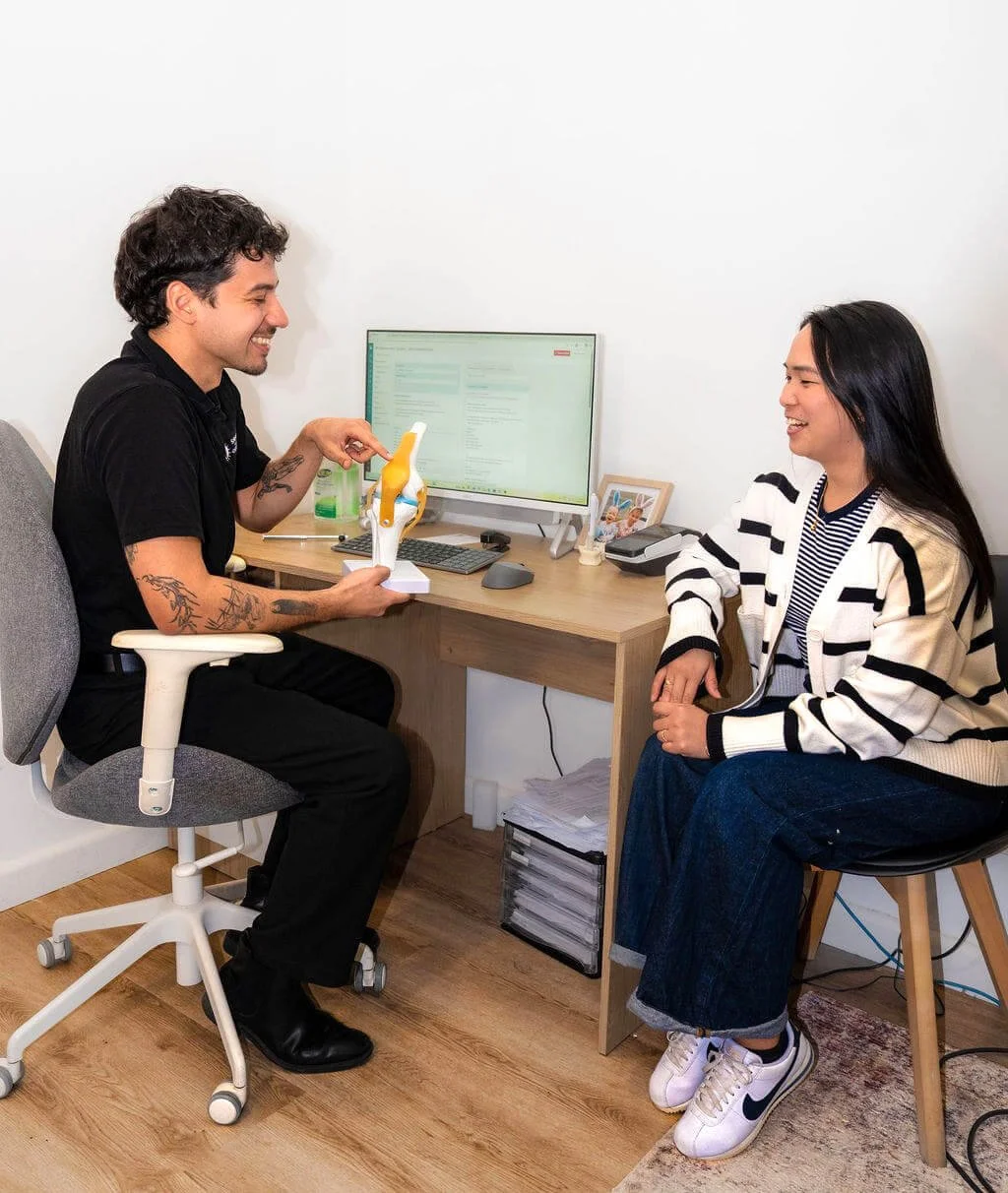
Helping you get back to your best.
Whether your goal is getting back to sport, enjoying daily walks, or simply moving with greater confidence, we're here to support your recovery every step of the way.
We'll take the time to understand your symptoms, explain what's contributing to your knee pain, and create a treatment plan tailored to your goals. We'll also provide practical advice and exercises to help support your recovery between appointments.
Book your knee pain assessment today and take the first step towards getting back to the activities you enjoy.
Osteopath For Knee Pain FAQ
-
Osteopathy may help manage knee arthritis by improving joint mobility, reducing muscle tension, and supporting the way your knee moves. While it can't reverse arthritis, treatment may help you stay more comfortable and active.
-
Pain on stairs can be caused by several conditions, including patellofemoral pain, tendon irritation, or arthritis. An assessment can help identify the source of your symptoms and determine the most appropriate treatment.
-
Yes. The way your hips, ankles, and feet move can affect how your knee is loaded during everyday activities. Your osteopath will assess how these areas are working together as part of your treatment.
-
It depends on the cause of your pain. In many cases, modifying your activity rather than stopping completely is recommended. Your osteopath can advise which exercises are appropriate for your recovery.
-
Knee clicking is common and isn't always a cause for concern, especially if it's not painful. However, if it's accompanied by pain, swelling, or locking, it's worth having your knee assessed.
-
You should seek prompt medical attention if your knee pain follows a significant injury, you're unable to bear weight, your knee is severely swollen or deformed, or you develop fever, redness, or warmth around the joint.
For ongoing or less urgent symptoms, an osteopathic assessment can help determine the most appropriate next steps.